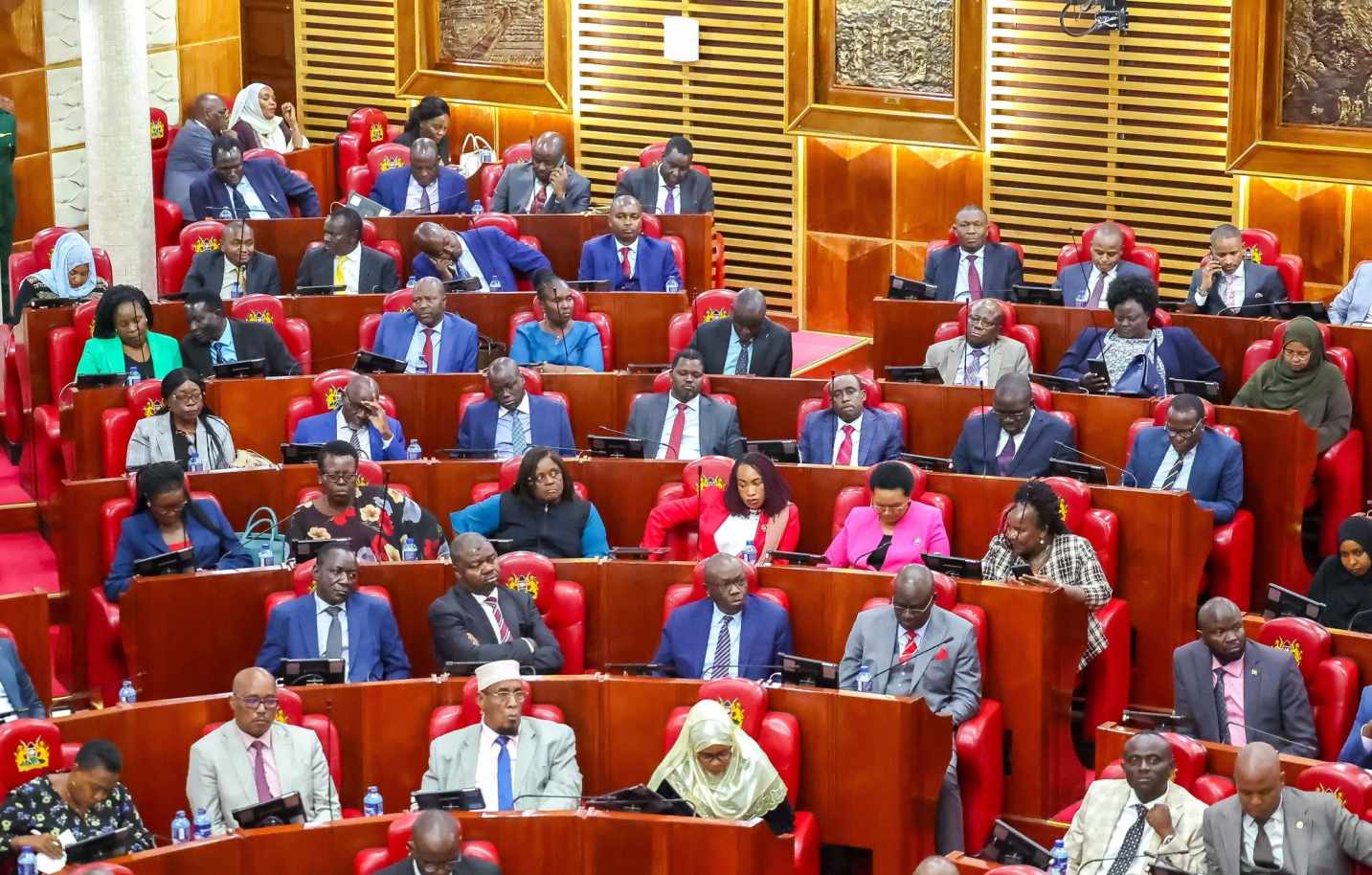
Kenya’s growing reliance on domestic borrowing is raising alarm among lawmakers, who fear the trend could limit credit access for businesses and households while increasing financial risks for the economy.
Members of the National Assembly Committee on Public Debt and Privatisation have cautioned that unless carefully managed, heavy borrowing from the local market could crowd out private sector lending and slow economic growth.
The warning comes as lower interest rates have created an opportunity for the government to borrow more cheaply through Treasury bills and bonds, issued via the Central Bank of Kenya.
The Treasury plans to source about 78 percent of its funding needs from the domestic market for fiscal years up to June 2029, using the lower cost of funds to bridge the budget deficit.
“Given the declining CBR (Central Bank Rate), the National Treasury should ensure that planned domestic borrowing remains appropriately sized and carefully timed so that government demand for funds does not unduly crowd out credit to the private sector,” the committee said in its report reviewing the government’s medium-term debt strategy.
The cost of government borrowing has fallen in step with the Central Bank Rate, which dropped from 13 percent in August 2024 to 8.75 percent. Returns on the 364-day Treasury bill have mirrored this trend, slipping to 8.9 percent last week from nearly 17 percent in March 2024.
Domestic debt in Kenya closed at Sh6.83 trillion at the end of 2025, representing 55.6 percent of total public debt of Sh12.29 trillion. Commercial banks, pension funds, and insurance firms hold the largest share, accounting for 79.1 percent of local debt as of February 13, 2026.
Households and foreign investors hold 6.4 percent and 4.7 percent respectively, according to Central Bank of Kenya data.
The government is expected to borrow around Sh800 billion each year through domestic securities to cover the budget deficit, which will remain above Sh1 trillion for the third consecutive year starting July 2026.
Net domestic financing for 2026/27 is projected at Sh890.4 billion, slightly higher than the revised Sh885.9 billion for the current financial year.
The Controller of Budget has echoed the lawmakers’ concerns, warning that while domestic borrowing is possible in the short term, excessive reliance could displace private sector investment, slow growth, increase future interest costs, and strain fiscal space.
The office recommended diversifying the domestic debt market and widening the investor base to reduce refinancing pressures and gradually lower borrowing costs.
It also noted that Kenya’s local market, while relatively advanced in the region, is narrow and heavily reliant on bank liquidity, which increases systemic risks and reinforces the crowding-out effect on private credit.
“Government financing relies heavily on bank liquidity rather than a broad and diversified investor base, which heightens systemic risk and reinforces crowding-out pressures,” the COB added.































Comments
Sign in with Google to comment, reply, and like comments.
Continue with Google